How to Measure Impact of Thought Leadership Content

To learn how to measure impact of thought leadership content, stop asking which post got the last click. Ask which point of view a buyer met, who on the account named it, and whether that account later opened or moved a deal. A pageview is a clue. It is not the impact.
Book a consultation to plan measurable thought leadership
Most teams already have a dashboard. What they lack is a rule for what that dashboard is allowed to claim in a quarterly review. This guide is that rule. It shows the evidence standard, the sales note that makes influence real, and the one-page model a CFO can read without a debate about credit.
If you still need the metric stack itself, start with how to measure thought leadership. This page starts after the dashboard exists. It will not reteach reach, influence, trust, and revenue. It will tell you which of those numbers you may carry into a finance meeting, and which ones stay in the working file.
How to Measure Impact of Thought Leadership Content
Impact is a change you can tie to a named asset. The change can be a journalist citing a finding, a buyer repeating it on a call, or an account entering pipeline after that exposure. Traffic sitting next to a logo is not enough.
Use four labels, and only four. They describe the path of one asset, not the health of the whole program.
- Seen. A target account opened a named asset. A report view or a media citation counts. A vague impression does not.
- Named. Someone on the buying team said the asset or its finding out loud. A sales note, a forwarded email, or a line in a transcript counts.
- Used. Sales or the buyer put the asset to work. A chart in a deck, a finding in a proposal, or a request for the source counts.
- Moved. The account opened, advanced, or expanded a deal after Seen, Named, or Used. Report the dollars beside the label. Do not add them into sourced revenue.
Seen is context. Named is the first claim worth a meeting. Used shows the asset did a job. Moved is the only label that sits next to pipeline. What thought leadership content is matters here, because a product blog and a citable point of view do not deserve the same label.
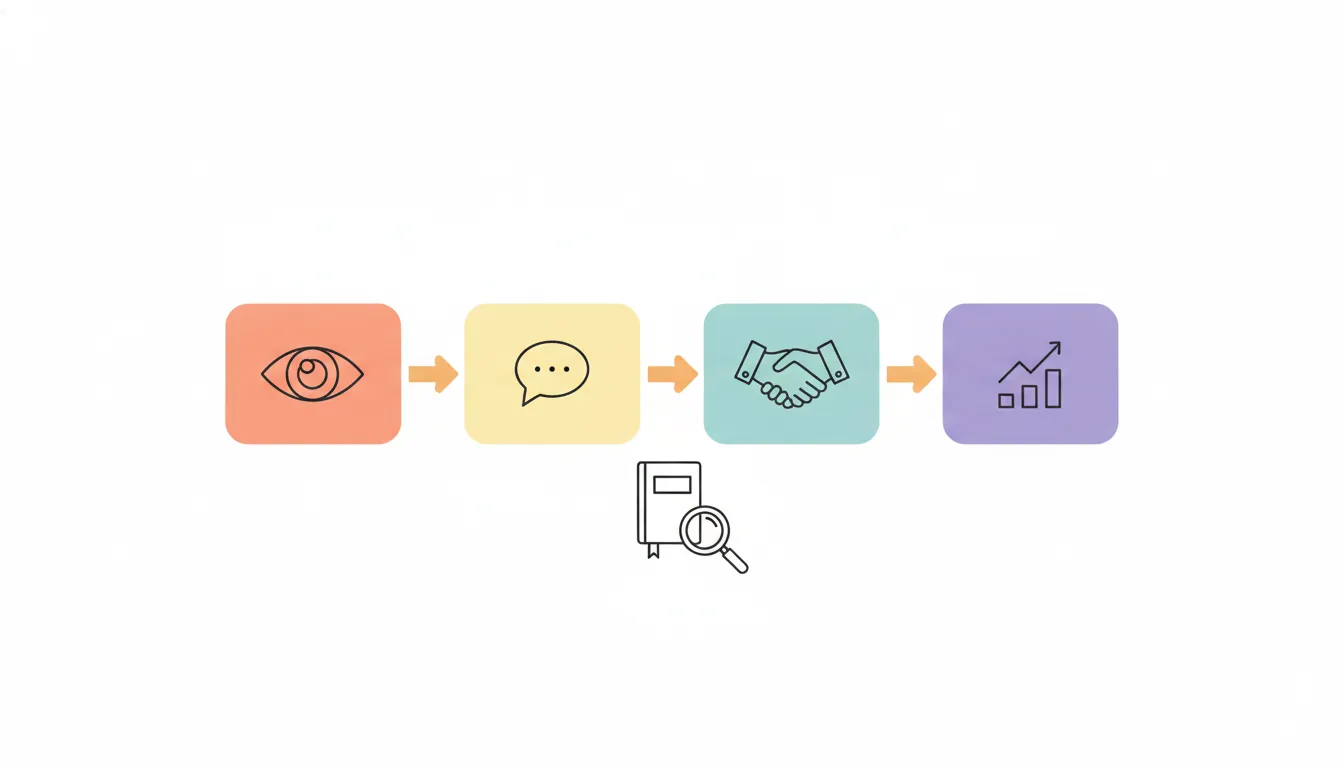
Read impact left to right: seen, named, used, then moved. Only the last label sits next to pipeline dollars.
You can measure impact when a buying account can be tied to a specific asset and a later action, not when a platform reports a view.
Why Does a Last Click Hide the Real Impact?
Last click rewards the page closest to the form. Thought leadership almost never is that page. A buyer reads a finding in March, mentions it in May, and books a demo in August after a sales email. The email wins the click. The finding did the earlier work.
That lag is normal, and it is why good programs get cut. The review looks at a short window, sees no form fills on the report, and calls the work a brand expense. The buyers who mattered already left the session.
Fix the window before you add another metric. A six-week report on a nine-month sale will always look empty. Set the review to the length of one real deal cycle, then judge the asset on labels, not on the form that closed the quarter. A short window can still be useful for Seen. It is a bad judge of Moved.
FT Longitude heard the same complaint from senior marketers. In a straw poll for its measurement framework, 98 percent said measuring thought leadership was difficult, and 82 percent were unhappy with their current approach. The gap is not more charts. It is a rule for claims.
A last click hides impact because the asset that changed the conversation is rarely the asset that received the conversion.
What Evidence Counts in a Quarterly Review?
Write the evidence standard before the quarter starts. If a number cannot meet the standard, it stays in the appendix. It does not enter the story you tell finance.
| Label | What you may claim | Proof required | Leave it out when |
|---|---|---|---|
| Seen | The account met this asset. | A logged view, download, or citation tied to the account. | You only have platform impressions. |
| Named | A person cited the finding. | A sales note, email, or transcript with the asset name. | The note says they liked the content. |
| Used | The asset did a job in the deal. | The deck, proposal, or follow-up that carried it. | Sales cannot point to the file. |
| Moved | Pipeline opened or advanced after exposure. | The opportunity stage and the date, next to the label. | You want to call it sourced revenue. |
Keep the table short on purpose. A quarterly review dies when every channel adds a row. One asset, one account, one label. If two assets touched the same account, list both. Do not blend them into a blended credit score.
Store the rejects. A spreadsheet of impressions, emoji reactions, and unnamed "great meetings" is fine as a working file. It is not fine on the page you send upstairs. The discipline is the cut, not the collection. Teams that measure everything end up defending nothing, because every number can be argued.
Original findings make this table easier to fill. A statistic with a source can be named. A generic opinion cannot. That is why a thought-leadership survey report is easier to measure than a pile of unsourced posts. The finding has a name, and the name can show up in a note.
Evidence counts only when it names the asset, the account, and the action. Everything else is color.
How Should Sales Record a Content Mention?
The signal software misses is a sentence. A buyer says, "We saw your finding on renewal risk," and the rep writes "good call." The impact disappears. Give sales one field and four prompts. Do not ask them to score influence.
- Asset. Which report, post, or chart did they name?
- Who. Name and role, even if the role is "unknown buyer."
- What they did. Mentioned it, asked for the source, or used it with a colleague.
- Deal state. No opportunity, open, advanced, or expanded, plus the date.
That note is the Named label. Without it, the quarterly model has nothing a CFO can audit. Train the field in the first week, then sample ten closed notes each month. If the asset name is missing, the note does not count. Survey data for sales enablement only helps if reps can point to the chart they used.
Do not add a score from one to five. Scores feel precise and cannot be checked. A missing asset name is a failed note. A named chart in a real deal is a passed note.
Review the field in public once a month. Read two good notes and one blank note in the pipeline meeting. Praise the specific asset name. Ignore the long paragraph that never names a file. People copy what gets read aloud. They stop writing what never leaves the CRM.
A sales note counts when it names the asset, the person, and the deal state. A vibe does not count.
How Do You Separate Influence from Revenue?
Influence and revenue answer different questions. Influence asks whether the account met your point of view before the deal moved. Revenue asks what closed. Put them in different sentences, every time.
A clean line sounds like this: "Fourteen target accounts were Seen on the renewal report. Six were Named on a call. Three opportunities advanced. None of those dollars are claimed as sourced." A messy line sounds like this: "Thought leadership generated $2.4 million." The second line is how the program loses the room.
Read multi-touch paths the same way. If the report was early and a demo email was last, say so. The report earns the Seen or Named label. The email keeps the last click. You do not need software to split the credit into percentages. You need the order of events. How thought leadership data wins buyer trust explains why that early exposure matters. This page only decides how to report it.
When finance wants a dollar figure, give influenced pipeline and label it as influenced. Then show the comparison you actually trust, such as win rate or stage speed for Named accounts versus accounts with no exposure. If the groups are too small, say the sample is too small. A refused number builds more trust than a precise fiction.
Write the comparison in plain counts. "Named accounts moved from stage two to stage three in 40 days. Unexposed accounts took 70." That sentence can be checked. A weighted attribution percentage usually cannot. If a tool offers a split, keep it in the appendix and do not let it rewrite the label.
Say what the content influenced, then say what revenue did. Never merge the two into one sourced number.
What Should the One-Page Model Include?
The model is one page, four rows, and a decision. It is not a tour of the analytics suite. Build it for the meeting, not for the team that loves dashboards.
- The asset. Name the report or finding, not the campaign. A quarter can feature one flagship and two supporting pieces.
- The labels. Counts for Seen, Named, Used, and Moved, with the proof source beside each count.
- The commercial line. Influenced pipeline, stage changes, and win rate or cycle time if the sample is large enough to say anything.
- The limit. One sentence on what you are not claiming. This is the line that keeps the CFO in the conversation.
Add one decision under the table. Keep the finding, point sales at a better chart, or commission a new survey because the library has nothing a buyer can cite. If the page does not end in a decision, it is a status update.
A single custom survey makes the page stronger over time. TrendCandy's model turns one survey into a report, blog posts, and social or infographic assets across 12 months or more. Each reuse is another chance for a Named or Used label, which is the content multiplication effect. The content multiplication model covers how that library is built. The review on this page only asks which of those assets earned a label.
The page is done when it shows four labels, one commercial line, one limit, and one decision.
Which Decisions Should the Review Force?
Measurement that does not change the plan is a hobby. Hold the review once a quarter, with marketing, the rep who owns the notes, and the person who will defend the number to finance. Walk out with one of three decisions.
- Keep and distribute. The finding is being Named. Put it in the sales deck and in the next media pitch. Do not write a new post that says the same thing.
- Fix the path. Accounts are Seen but never Named. The asset is hard to cite, or sales cannot find the chart. Repair the handoff before you publish more.
- Replace the evidence. Nothing in the library can be named. Commission original survey research so the next quarter has a finding with a source. A media pitch built on original survey data fails the same test if the number cannot be cited.
Account-based work follows the same rule. Survey-backed content for new accounts is working when those accounts show up as Seen and then Named, not when the campaign report is green. For the scorecard that follows a single survey launch, use measuring content marketing research impact. For the math before you buy a survey, use the ROI of thought leadership survey research. Neither replaces this review.
The review succeeds when it forces one decision: distribute a finding, fix the path to sales, or replace the evidence.
Book a consultation to build a quarterly impact review
Frequently Asked Questions
How do you measure impact without a last click?
Tie a named asset to an account, then record whether someone cited it, used it, or moved a deal after that exposure. Report those labels beside pipeline. Do not convert them into sourced revenue.
What should a CFO see each quarter?
One page. Four labels, the proof behind each count, the influenced pipeline you will defend, and one sentence on what you refuse to claim. End with a single decision.
How is this different from a metric dashboard?
A dashboard lists activity. This review sets the claim you are allowed to make. The metric stack still matters, and it already has its own guide. Start there if you do not have the numbers yet.
Why does original survey research make measurement easier?
A finding with a source can be named in a sales note, a story, or a deck. A generic post usually cannot. One survey can also feed a report and many later assets, so the same source keeps producing labels.
What if sales will not fill out the note?
Ask for four fields, not a score. Asset, person, action, and deal state. Sample ten notes a month. If the asset name is blank, the note does not enter the review.
Ready to become the source?
Get a done-for-you original survey, from $5k, in 2–3 weeks — and a year of content that cites you.
Book a call